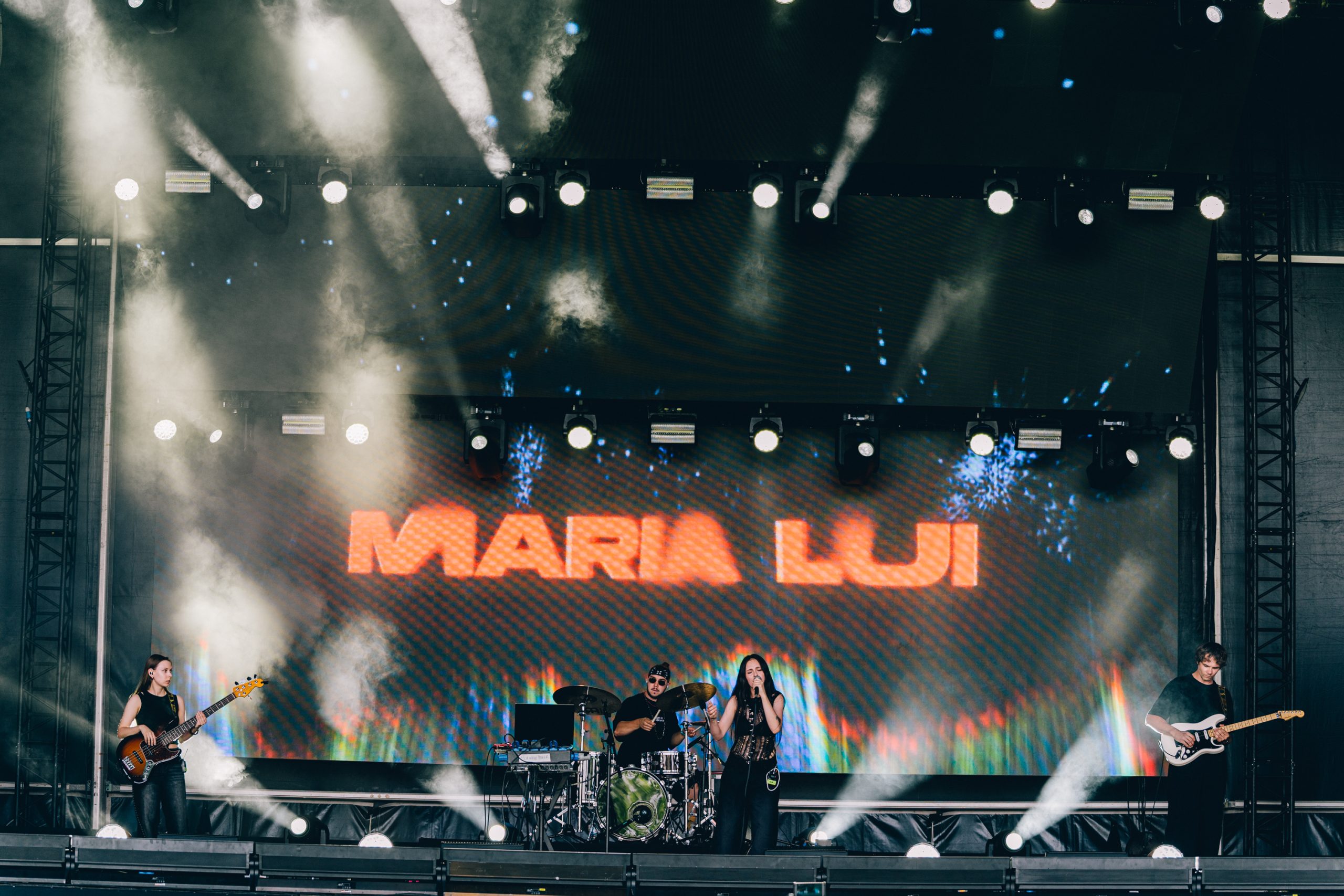

From Australia to Kyiv: What So Not on russian Attacks, Ukrainian Artists and Collaboration with DOROFEEVA
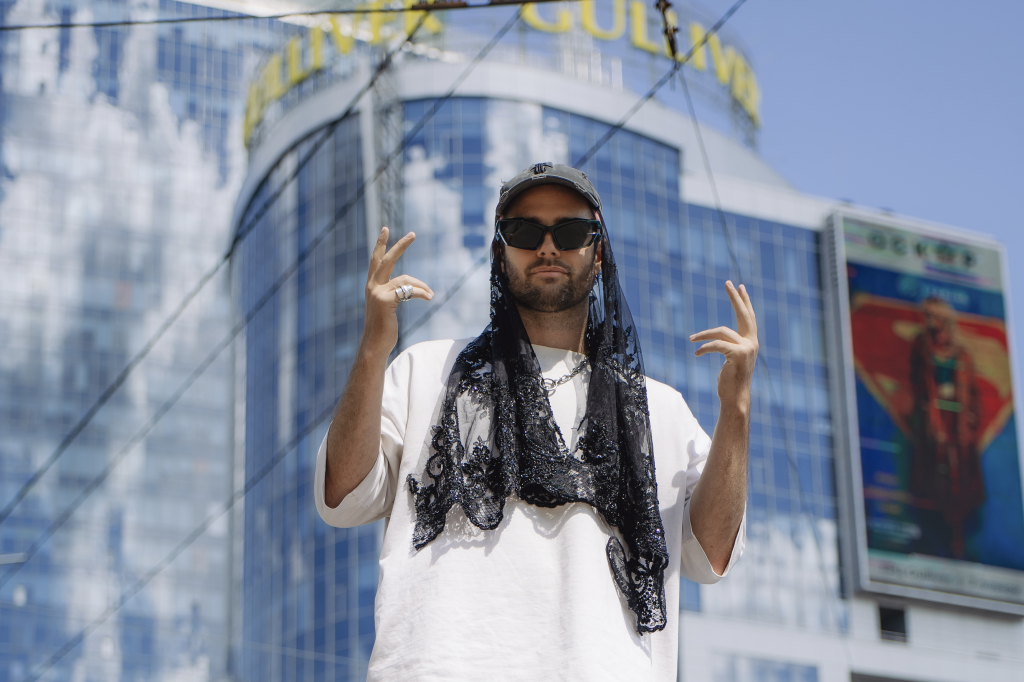
Australian producer and musician What So Not first performed in Ukraine back in 2018. Years later, he returned to Kyiv during the full-scale war to reconnect with the Ukrainian audience, experience the city firsthand, and collaborate with local artists.
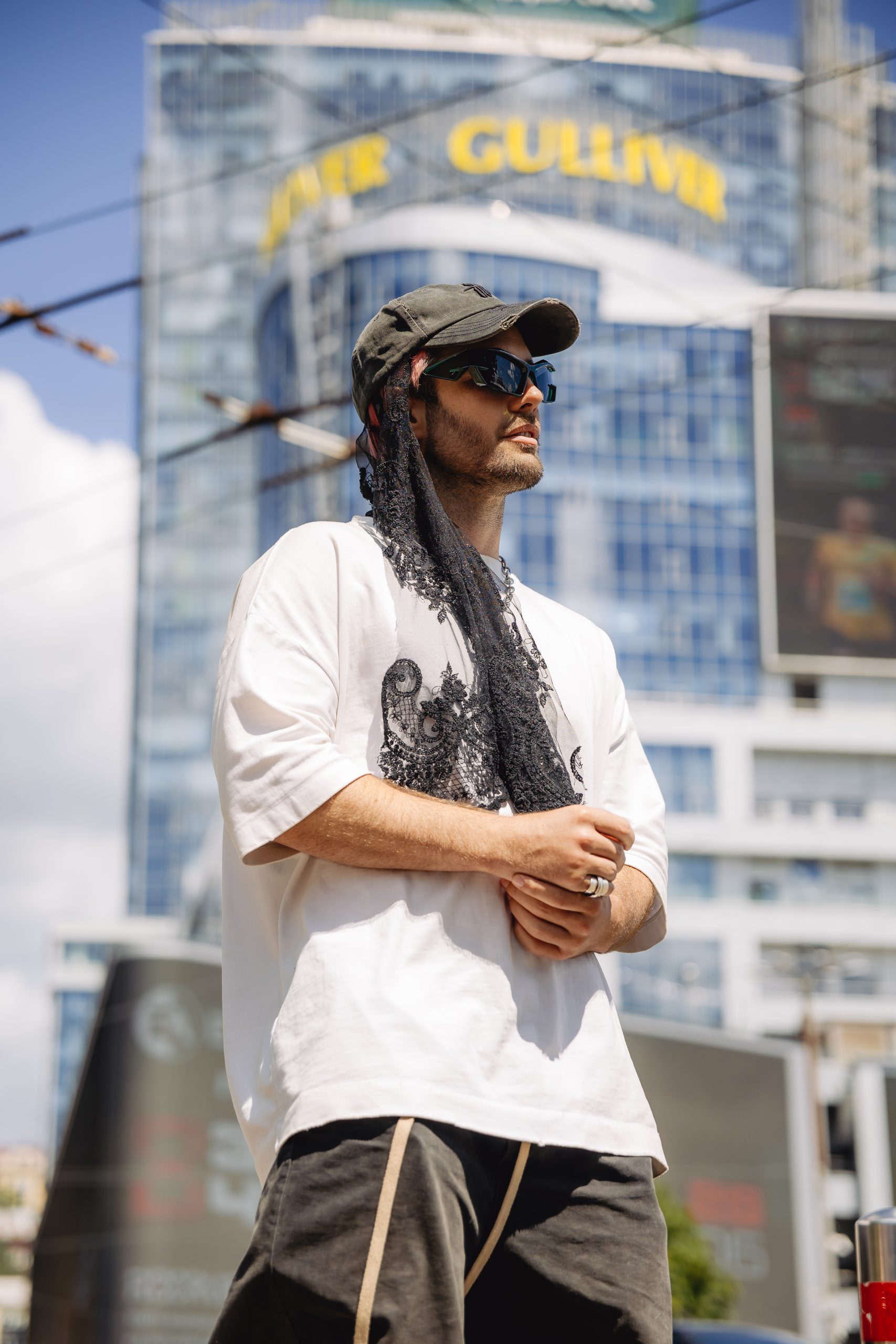
During his visit, What So Not worked with DOROFEEVA, OTOY, Alina Pash, Badwor7h and Oi FUSK, while also making a spontaneous appearance at a Kyiv rooftop party. He documented his experience in Ukraine in a short documentary, hoping to bring international attention back to what is still happening in the country every day.
In this exclusive interview, What So Not talks about returning to Kyiv, experiencing the russian attacks firsthand, the ability of Ukrainians to find joy even in the most difficult circumstances, his collaborations with Ukrainian artists, and his plans to bring Ukrainian voices and culture to a wider international audience.
How would you introduce your music to the Ukrainian audience?
What So Not: For anyone who doesn’t know my music, I’ve worked across many different genres over the years. It started as unusual club music and then moved into halftime and bass music. I was part of that first wave of future bass and trap music, then went into drum and bass. There has been techno in there as well, and I’ve even done punk rock projects with some big artists here in Australia.
So it’s really been a big mix of everything. I guess I’d say: just go check it out. Rather than being a particular genre, my project has a common thread in the feeling of it. It has an emotion to it. If you connect with that emotion, I think you’ll connect with a lot of the different genres that I’ve done over the years.
I was very lucky to come to Ukraine back in 2018 to do a concert. It was very nice to have some Ukrainian people knowing who I was back then.
You work with such a variety of sounds and genres. What influenced you the most?
What So Not: Everything. I think everything. You just walk around during the day and pay attention to things in nature, conversations with people at the coffee shop — all of these simple things can be inspirational.
And, of course, even very big things, like coming to Kyiv recently and being shown firsthand what everyone is living with there every day. These things are very powerful and can inspire some very powerful music as well.
I took a look at your documentary, which you made during your time in Kyiv. It’s a very brave thing to come here during wartime. How did your first visit to Ukraine happen, about seven years ago?
What So Not: I just played. The guys from Salat Party invited me to come and play a concert. It was at Atlas club. They brought me up for the first time, but then really it was Alina Pash who made this trip happen. She’s been such an amazing advocate for Ukraine outside of the country, spreading the word about what’s happening there and spreading Ukrainian culture outside of the bubble that can exist.
I know what it’s like coming from Australia. Getting our message and our sound out of our island can be a challenge. And I see her doing that so amazingly.
I’ve worked with her over the last few years on a couple of records, and she was like, “Chris, you’ve got to come back to Ukraine. You’ve got to come back to Kyiv. People miss you there. They would appreciate it so much if you came, even though it’s such a challenging time right now.”
What made you decide to come back?
What So Not: It was very cool that Alina was like, “If you come, we have some of the most amazing people in film, some of the most amazing artists, rappers and producers, and a lot of them cannot leave because of the restrictions around the war.”
Being there, I saw how eager everyone was to work. They want to collaborate. They want to share their message with the world. Some of them are a little bit stuck and unable to do that.
So many doors were open for me coming in and working with Nadiia Dorofeeva, OTOY, Badwor7h and Oi FUSK, and of course Alina as well.
It was really incredible reconnecting with these beautiful promoters, Mike and Stas, who brought me out for the first time, and doing this very special rooftop party spontaneously, with only a little bit of notice. It was so special, and seeing how much it meant to people that someone actually came was incredible. We had such a special time together, and we were very lucky that those few days were very chill with everything that goes on with the bombings and things.
We really appreciate it when artists come to us. Since the full-scale war started, you can count on one hand how many international artists have actually come to Ukraine. You’re one of the few artists who came, and we really appreciate it.
What So Not: I didn’t know it was that few. That’s crazy.
Being there, I know it gets a little sketchy at night sometimes, but during the day it’s just like any other city. It was beautiful. I couldn’t believe how cool everyone was, how good the fashion was, how amazing the food was. You’re just going to a café, going to a museum. Everyone’s smiling, everyone’s giving each other flowers.
It was so special to see the energy and the feeling that everybody in Ukraine carries. There is pride and there is joy. It was incredible to see how strong everybody is there and how much they’re embracing life.
Tell me more about your collaboration with DOROFEEVA, OTOY and Badwor7h. Will it be some kind of EP?
What So Not: Yeah, that’s exactly what I’ve been thinking. I’m potentially starting a record label, and even with that, perhaps there could be some world where we showcase Ukrainian voices. I like that idea so much.
I’ve learned so much about the culture you guys have there and the artistry you guys have there through these little windows I’ve been given. I really can’t thank Alina enough for inviting me into that and setting all of that up and making it happen.
It was so cool to work with Nadiia and everybody else and just see how genuinely chill and cool they were. The thing that blew my mind was that there were some really heavy bombings the night before, I think on the night before July 12 or something. And they were all in the studio on time, especially Nadiia. No excuses, just straight to work the morning after that.
That was very impressive to me. I was like, “Wow, these people are serious. They mean business.” And they get to do something great.
It’s some kind of escapism because during the daytime, we’re happy to be able to do something. How did you feel throughout this visit when you experienced those bombings in Kyiv?
What So Not: It was pretty interesting. I hadn’t experienced anything like that in my life. I’ve had to evacuate a country once when it went into civil unrest. That was an interesting experience.
But the only thing I can compare it to — and it’s a much milder version — is being a surfer in Australia. We have a lot of sharks and a lot of shark incidents. They’ll run a siren when the sharks are near where you are.
It’s not quite comparable, but it’s similar in that you’re in the ocean, you’re having a lot of fun, the waves are good, but you pay attention to your surroundings. You look around: Is there a bird circling over there? Is there some dark movement in the water? Is there anything like this? How safe do we feel? How seriously do we have to take this alarm and this notice? What’s our action right now?
It was, I guess, a more extreme version of that.
And it’s not like an animal that doesn’t know any better. It’s literally people attacking your country. It’s very different in that sense, and it’s strategic in the way that it’s being carried out.
I was with a great group of people, and they were giving me really good advice. Do we go down to the basement of this building? Do we go all the way down to the metro, to the bomb shelters? What’s the safest place to be? Do we sit in the corridor? Everyone was using Telegram messages, working out where they were hitting that night and how hard they seemed to be hitting.
I guess everybody has to deal with this every day. You do start to strategize about what your approach is each night, depending on what’s happening.
It’s really nice that you had people around you who could guide you and keep you safe.
What So Not: Yeah. It would be very frightening if you didn’t. As a tourist who was there, I was grateful that I had the right kind of people around me — people who were calm and had experience with it.
Most of them were just frustrated with it. They weren’t scared. They were just like, “Ah, we’re going to deal with this again tonight.” That is also impressive: how brave everybody is. They’re not even scared of it anymore. It’s just a nuisance and means that they probably won’t get much sleep.
I think people have just gotten used to it. They stopped caring.
What So Not: Yeah. They’re also really impressive in the amount of joy they manage to find in those nights.
They look at it like, “Well, this is going to be annoying and we’re going to be awake until six in the morning, so we might as well enjoy each other’s company.”
It’s probably going to be hard to sleep, so we might as well sit around, tell some stories, have some laughs, maybe drink some wine.
It’s incredible that everyone has become so adaptive to this really horrible thing that’s going on and just kind of makes the most of it as best they can until they get to the morning.
How did you come up with the decision to document this trip and make a short documentary?
What So Not: You know, as an artist, I often go around filming things here and there for my Instagram stories or whatever. I didn’t really plan on making anything. I didn’t actually get my phone out that much. I just filmed a few things here and there.
I thought I should capture some little clips of things that were happening. And I did. Then, as I laid it all out a few days later, I thought, “Wow, there’s really a story here.” It’s a story of this experience and of what is happening here in Ukraine.
To be honest, the news isn’t out there in the world as much as it was before, and that made me very sad because I saw what’s still happening there every day. I was glad I got a little glimpse of it, and maybe a different glimpse from most people, as you said, because only a handful of artists are coming in.
I hope that the message I managed to capture while I was there means something to people, reminds them, and brings attention back to what’s happening in Ukraine.
Let’s speak more about your process with Alina. How do you usually write songs? Who has the ideas? Who brings the lyrics and all that stuff?
What So Not: I met Alina very randomly. She came to meet a Georgian artist, Nitepunk, who was a roommate at the house I was staying at. We met very briefly through that, and then a few months later, we got in the studio.
I played her a couple of songs, and one of them was a production I’d been working on for ten years. It was something I made back in the 2016 era. Over the years, I’d leave it for a year and then think, “Oh, I like that idea. Let me chip away at it again.” I’d bring some new skills, new ideas and new production styles to it.
I showed her this song, and she was like, “Wow, this is so cinematic. I really am drawn to this.” It was the song that became “Everest.” She asked, “Do you think I could sing in traditional Ukrainian folk style on it?” I was like, “Yes, please.”
Many years earlier, I’d sampled a Bulgarian choir, which has very similar movements, vocal style and harmonics. She was like, “Oh, wow, so you are familiar with this.” And I was like, “Yeah, I love the sound. I can’t believe it. Let’s do it. This would be amazing.”
That’s how that song started.
We did something very cool. I loved that it began in Ukrainian. Then we built the same vowel structure and the same melodic movement in the second verse, but in English.
I got her to translate exactly what the words she was saying meant. Then we picked very similar words in English that had the same vowel shape. So you can actually put the Ukrainian verse and the English verse on top of each other, and they sound like they’re saying the same thing.
That was a really cool thing because, as I’m sure you guys know, in Ukraine it’s sometimes hard to get non-English music out into the world. It’s a little harder for people to connect with it.
But I think it was a beautiful mantra that she had created for the record. Sometimes, with those feelings and harmonics you create with vocals, you don’t need to understand the words themselves. You can feel what they mean.
By converting it into English with the same energy, I think it really helps to get Ukrainian culture out into the world in a much bigger way.
It’s very cool that now we have these two polarized songs about very different things. Then, from touring and showcasing “Everest” to everyone before it was out, as it started to come out, Alina and I ended up writing a ton of other music.
She obviously can do folk, rap, pop, and she can sing — all of this different stuff. It’s been very cool and exciting working together on a lot of records.
Yeah, she’s very versatile. How did the rooftop performance happen? Was it just during the day? Tell me how it came together.
What So Not: Yeah, we had a little bit of time. It wasn’t much, but we had a little bit of time.
Again, because I’d done these songs with Alina, she was like, “You should come back to Kyiv. People want to see you there. They’d appreciate it so much.”
I remembered Stas, the promoter from Salat. I’d even tried to message him when the war started to check that he was okay because, when I was there in 2018, he was telling me, “If this war starts, I’m going to get conscripted. I’m not going to be a promoter anymore,” and all of this stuff.
So I said, “Can you find that crew and see what they’re doing?”
Then we connected again, and everyone was just like, “Okay, let’s do this. We’re going to do this show. We’re going to build it out like this.”
It was so beautiful how it all came together.
It’s really nice that it happened so spontaneously, but it was also about reconnecting with people you had met previously. Do you have any plans until the end of the year, maybe some releases, collaborations, concerts or performances?
What So Not: Yeah. I’m just about to finish my first US tour here—or my second US tour for the year.
I actually come back to Kyiv. I’m back in Kyiv for a few days, maybe from August 24 until September 2, very soon, because I’m finishing that record with Nadiia and probably a few others with OTOY and Oi FUSK.
I’m working more with Alina, and hopefully with Badwor7h as well. I’m sure this time we’re going to try to record some authentic Ukrainian instruments to put on a few records, which I’m very excited about. Then I have to fly all the way back to Australia for a show. I’m there for a few weeks, doing press around this EP, and then back for another American tour and then back to Europe.
Do all these artists feature on one track together, or are there different tracks for each one, like Nadiia and OTOY?
What So Not: I think I have four new tracks with different Ukrainians right now. They’re all really good. They’re not little ideas. They’re finished songs.
There’s one with OTOY and Alina. There’s one with a girl, Eloise, from the UK. There’s one that’s just me and Nadiia.
And there are some songs Badwor7h showed me that were so cool that I’m actually excited to dive into them.
I’ve also learned that a lot of people there aren’t only excited to showcase their Ukrainian language. They’re also learning English and weaving English in clever ways to encourage people into this Ukrainian world. I’m excited to work on that a little bit.
I did this song with OTOY, and it’s like using words that work for English speakers. I think that can bring people into the culture and help the culture spread a little more, particularly while people can’t leave Ukraine.
So I’m starting to get an idea of what matters and what can be done to make this a bigger thing. And I hope to make that happen.
That sounds very promising. Are you planning to have some kind of preview or presentation of this project during your next trip, or will it be later, when everything is finished?
What So Not: Maybe. We’ll see. I think the focus on this trip is to finish the recordings and make sure everything is feeling really exciting and strong.
But maybe, I don’t know. I know my friend Apache is playing, and I think Alina’s on that show as well. We’ll see what happens. Maybe there’s some chaotic last-minute excitement we bring to it all.
Interviewed by Mykhailo Tovtyn